

Site Overlay

Private Electricity

Private Electricity

RESIDENTIAL COMMUNITIES
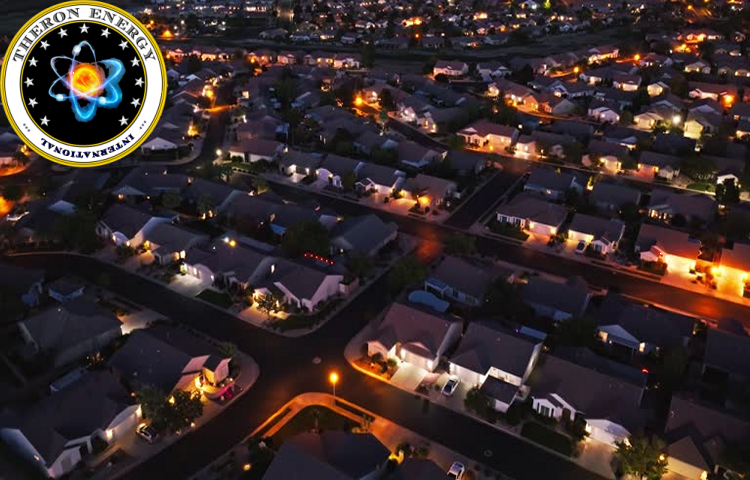
There is one industrial generator per residential community. Up to 200 homes. Benefits: The builder or land developer buys a generator from us and supplies all the residences with cheap energy at 10 or 50% of regular utility costs. Under new laws, you can not be connected to the grid, but you can be your own energy supplier.

A 200-housing community in the United States uses approximately 170,000 to 180,000 kilowatt-hours (kWh) of electricity per month on average. One 500kWh ($758,950.00 (price excluding tax) generator for the entire community is paid off after year one. You can even sell surplus energy to the next community!

Private Community with own power

COMMERCIAL STRIP MALLS/SHOPS
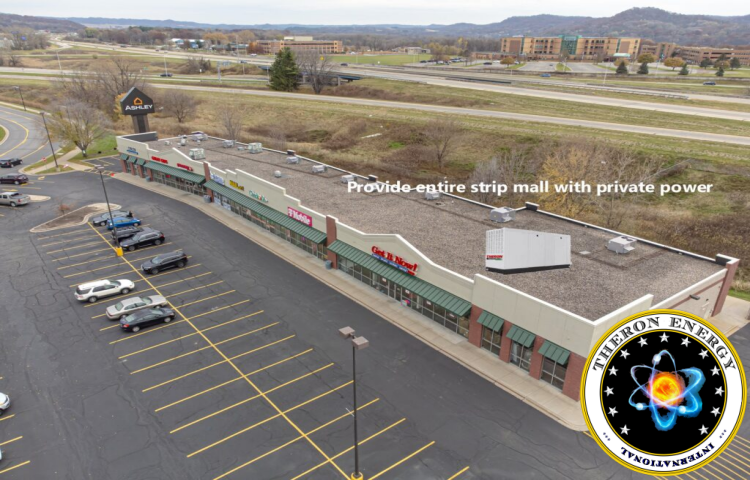
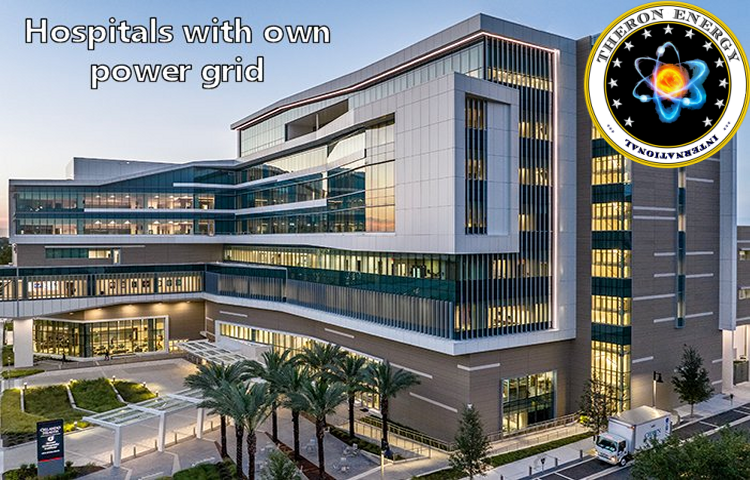
Whether you have an office building, strip mall, or high-rise apartment building, hospital, police station, prison, etc., one generator can supply power to the entire place for as little as 10 or 50% monthly for what youR TENANTS  paid the local energy utility company. You become your own behind-the-meter energy supply company and set your own rate or make it free! For a, say, 50,000-square-foot strip mall, this translates to roughly 76,250 kWh per month (months). Individual small, non-anchored shops within a strip mall may use between 20,000 and 499,000 kWh annually, depending on their specific HVAC and lighting needs.

Strip Mall Private Electricity

INDUSTRIAL or HOTELS or LARGE BUILDING
The sky is truly the limit. If you manage a mall, a hotel, or a residential tower, this is your opportunity. UNDER NEW LAWS, as long as you are not tied to the GRID, you can be the supplier of your own domain for electricity. Just one of our larger generators or several linked together can deliver unlimited, reliable power without interruption. You have complete control—charge your citizens for this power, setting the rates exactly as you deem appropriate. These generators are built to last for decades and are both waterproof and EMP-proof.
Under the newly passed legislation called DATA Act (Decentralized Power Act), the law promotes BtM (Behind the Meter) and DERs (Distributed Energy Resources).

Hospital Private Power

DATA ACT (USA)


Key ENERGY LAWS in 2025–2026 include: 

  • Federal Deregulation: The DOE is cutting 47 regulations to lower costs and boost energy independence.
  • BtM/DERs Optimization: New policies promote using BTM, such as rooftop solar and storage, to support grid reliability.
  • Decentralized Power (DATA Act): Introduced in Jan 2026, the legislation allows manufacturers and data centers to build isolated energy systems outside of federal Federal Energy Regulatory Commission (FERC) oversight.
  • Virtual Power Plants (VPPs): Increased support for integrating DERs, such as EVs and smart buildings, into VPPs to balance grid demand.
  • Energy Storage Mandates: State-level legislation, such as in Oregon and Virginia, has made it easier to permit and site grid-connected storage.
  • AI and Tech Regulation: Beyond energy, new laws are regulating AI-created content and deepfakes. 

These regulations aim to reduce reliance on centralized power, encourage private investment in energy infrastructure, and utilize AI-driven control for demand flexibility. 

The DATA Act of 2026 will eliminate outdated federal regulations and enable manufacturers, data centers, and other energy-intensive industries to build customized electricity systems without impacting existing power grids.

 

EU Data Act

The EU Data Act, in force as of September 12, 2025, is a regulation designed to unlock industrial and consumer data, allowing users of connected devices (IoT) to access, use, and share generated data. It curbs vendor lock-in, enabling easier switching between cloud providers, and mandates fair data-sharing contracts, impacting both personal and non-personal data across all sectors. 

Key features of the EU Data Act include:

  • User Empowerment: Users (both consumers and businesses) gain rights to access data generated by IoT products and related services, allowing them to share this data with third parties for repairs or other services.
  • Manufacturer Obligations: Manufacturers must design products that make data easily accessible to users by default and, in some cases, provide data to third parties upon user request.
  • Cloud Switching: The Act introduces measures to facilitate switching between cloud and edge data processing services, aiming to reduce vendor lock-in.
  • Unfair Contract Terms: It prohibits the unilateral imposition of unfair contractual terms regarding data access and use, particularly protecting small and medium-sized enterprises (SMEs).
  • Public Emergency Access: Under strictly defined, exceptional circumstances, public sector bodies may request data from private entities to respond to emergencies or to fulfill specific, legally defined tasks. 

Scope and Impact
The Act has broad, extraterritorial reach, applying to manufacturers of connected products and providers of related services available in the EU market, regardless of where the company is headquartered. Failure to comply could lead to penalties, as it introduces a new, comprehensive framework for how data is accessed, used, and shared, moving beyond the personal data focus of the GDPR. 
⚖️ Waying your options to be in charge – OWN ENERGY. 
Distributed Energy Resources (DERs)

The 2026 electricity landscape prioritizes technical authority and financial outcomes, including learning the technical electrical jargon.

  • Consumer Regulated Electric Utility (CREU): This is the emerging legal designation for private entities that generate and distribute power independently of traditional public utilities.

  • Behind-the-Meter (BTM) Generation: Use this to describe any system that generates power on the user’s side of the utility meter, essentially making the main grid a “backup” rather than the primary source.

  • Grid Arbitrage: This is the practice of avoiding high utility “peak” rates by using your own stored or generated power when grid prices spike.

  • Energy-as-a-Service (EaaS): A business model where you sell the service of electricity through a contract, rather than just the hardware.

  • Islanding / Physically Islanded: The technical ability for a property to disconnect from the main grid and operate autonomously—a major selling point for “private electricity”.


⚖️ Navigating USA Rules & Laws

To legally “be your own utility,” you need to follow a multi-layered regulatory framework.

1. The Federal Framework (FERC)

  • FERC Order No. 2222: This landmark rule mandates that regional grid operators allow small-scale Distributed Energy Resources (DERs)—such as Theron Gensets—to compete in wholesale energy markets.

  • Qualifying Facilities (QFs): Under the PURPA law, if your system is small and efficient, traditional utilities are often required to buy your excess power at “avoided cost” rates.

2. State-Specific Rules (Example: Florida)

  • Florida Solar Rights Act (FSRA 163.04): Protects the right of homeowners and HOAs to install renewable and energy-saving structures, prohibiting bans by local governments or HOAs.

  • Net Metering Step-Down: As of 2026, Florida’s net metering credits for selling back to the grid have dropped (e.g., to 60% in 2026), making Behind-the-Meter consumption much more profitable than selling back to the utility.

  • CREU Legislation: Newer 2026 policies allow Consumer Regulated Electric Utilities to operate independently for non-residential loads (data centers, industrial sites) with limited oversight from state utility commissions.

3. Residential Submetering & Resale

If you plan to charge residents “whatever rates you decide,” you must be careful:

  • Rate Limits: Many states (like Florida) require that, if you resell electricity to tenants or residents, the rate cannot exceed the local utility’s rate.

  • Power Purchase Agreements (PPAs): To avoid being regulated as a “Public Utility,” most private providers use a PPA, where the resident pays for the service of the electricity generated on-site rather than a simple per-kWh retail sale.

✍ Information becoming your own electricity supplier

The WHY? Proposed “Authority”
“Become your own utility company!” “Establish a Consumer Regulated Electric Utility (CREU) for Property Sovereignty.”
“Charge your customers whatever monthly rates you decide.” “Monetize your on-site generation through Power Purchase Agreements (PPAs) and Energy-as-a-Service revenue models.”
“Do you live in a homeowners association?” “Empower your HOA with a Physically Islanded Microgrid to eliminate grid-dependency and utility rate hikes.”
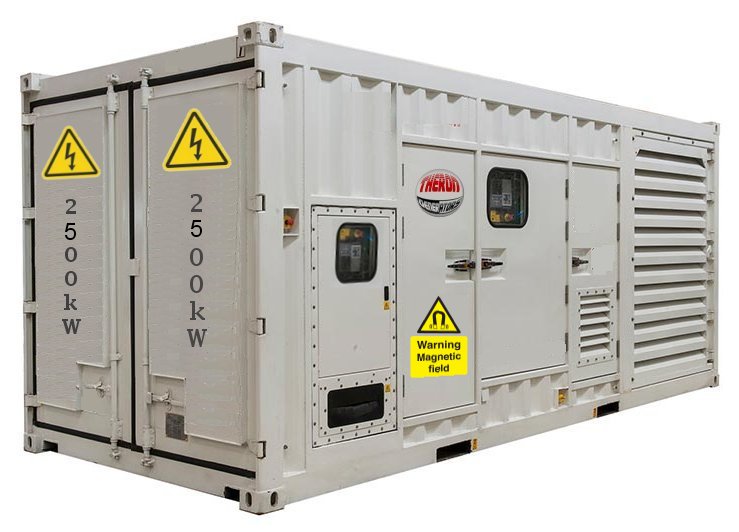
“Invest in one of our generators.” “Deploy Theron Distributed Energy Resources (DERs) to capitalize on Grid Arbitrage and BTM efficiency.”

The THERON ENERGY way:

  • “Master Your Energy Sovereignty with Behind-the-Meter Innovation.”

  • “Deploy a Private Microgrid: Decouple from Volatile Utility Rates.”

  • “Turn Your Property into a Revenue Stream via Grid Arbitrage and BTM Generation.”

A Quick Comparison for Users

Feature Traditional Utility Theron Private Electricity
Control External / Monopoly Internal / Sovereign
Pricing Subject to Rate Hikes Fixed / Owner-Defined
Resiliency Vulnerable to Grid Failure Islanding Capable

⚖️ Laws & Rules to Adhere To (USA)

Navigating the U.S. energy landscape requires knowing who “owns” the rules. It is a mix of federal and state authority.

1. Federal Level (FERC)

The Federal Energy Regulatory Commission (FERC) governs wholesale markets.

  • FERC Order No. 2222: This is your best friend. It allows small-scale DERs to compete in regional energy markets. If your equipment is “FERC 2222 compliant,” you’re telling the world it can actually make money by helping the grid.

  • PURPA (Public Utility Regulatory Policies Act): This law requires traditional utilities to buy power from “Qualifying Facilities” (QFs) at an “avoided cost” rate.

2. State Level (PUCs/PSCs)

Each state has a Public Utility Commission.

  • Retail Sales Prohibitions: In many states, you cannot technically “sell” electricity by the kilowatt-hour (kWh) to a neighbor unless you are a registered utility.

  • The Workaround: Many private providers use a Power Purchase Agreement (PPA) or incorporate the energy cost into a “facilities fee” or “lease amenity” to avoid being classified as a regulated utility.

3. Interconnection Standards

Even if you are “private,” if you touch the grid, you must follow IEEE 1547 standards. This ensures your system doesn’t “backfeed” and injure utility workers during an outage.


✍️ Why Private Electricity

Instead of “Paying your Energy Bill FOR LIFE with your monopoly utility company,” try these more “B2B” and “Prosumer” energy options instead:

  • “Master Your Energy Sovereignty with Behind-the-Meter Innovation.”

  • “Deploy a Private Microgrid: Decouple from Volatile Utility Rates.”

  • “Turn Your Property into a Revenue Stream via Grid Arbitrage and BTM Generation.”

  • “Create generational wealth for your family.”

A Quick Comparison for Your Users

Feature Traditional Utility Theron Private Electricity
Control External / Monopoly Internal / Sovereign
Pricing Subject to Rate Hikes Fixed / Owner-Defined
Resiliency Vulnerable to Grid Failure Islanding Capable
error: Content is protected !! You are not allowed to print preview this page, All Content Copyright Protected !!!